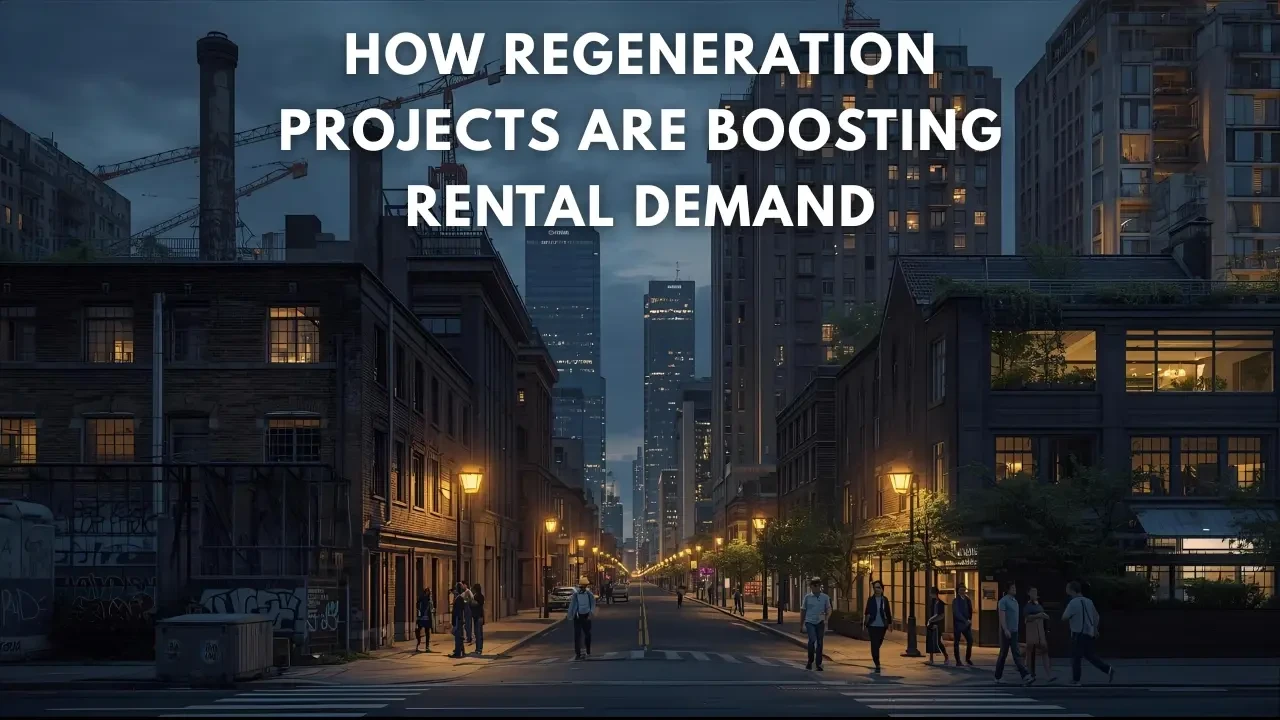
In the UK, regeneration projects have played great roles in creating rental demands and thus becoming increased drivers that have been kept for several years. As governments and local authorities, as well as private developers, invest in the transport system, amenities, housing, and green infrastructure, many areas are experiencing transformation-greatly on the quality of life in the urban setting. From such a situation, it may be considered that the demand for a rental in the regenerated area increases because of either an improvement in the life Standard or price.
What Is Urban Regeneration?
Urban regeneration involves the revival of areas that are going into decay and have either been neglected under-investment or simply without modern facilities. The key components often considered in any such plan are
- Good transport links (new stations, improved public transit)
- New housing, usually mixed use or mixed income
- With enhancements to green spaces, leisure, and public realm
- Commercial and cultural enhancements (shops, offices, entertainment)
- With improved infrastructure and services (energy efficiency, broadband, etc.)
In a well-organized development, one expects the area to gain attractiveness for people to live, work, and even rent in.
Why Regeneration Drives Rental Demand
Improved Infrastructure
Good transport connections often reduce commute times so that people could live farther away from traditional centres while still being onsite.
Modern Housing Stock
New-construction or refurbished stock includes many features such as energy efficiency, high-speed telecommunication connectivity, and modern technical layouts that are attractive to current renters.
Active Community Spaces
Cafés, cultural spaces, and well-landscaped parks provide social and recreational value, consequently heightening desirability in regenerated districts.
Economic Growth
New regeneration projects attract some businesses and new jobs, which, in turn, serve to increase the number of people looking for rental accommodation within close proximity to those work opportunities.
Trends in 2025
Higher Rent Growth in Regenerating Areas: It has been researched in major cities across the United Kingdom and it shows that rents in districts being actively regenerated have been rising at a higher annual rate than the national average.
High Occupancy Rates: Vacancy rates are low in these areas because demand exceeds supply.
Shift Away from London: Particularly strong demand for renting is witnessed in open cities in the North and Midlands because of large-scale renewal schemes and improved rail connectivity.
Benefits for Different Groups
For Tenants
Freshly constructed or entirely modernised residences.
Less distance to improved transport, shops, and leisure services.
Future capital appreciation opportunities as the neighbourhood heads north.
For Landlords and Investors
Stronger yields through premium rents and low voids.
Steady capital appreciation as regenerated districts gain momentum.
A broader spread of tenants, from young professionals to downsizing retirees.
Points to Consider
Affordability Pressures: Intensifying demand can cause rents to rise above the ability of lower-income groups to pay.
Construction Disruption: Noise and traffic in the early phases of regeneration would exist before the full benefits become evident.
Community Balance: Changes in culture or demographics may be confronted by long-standing residents, sometimes also resulting in their clashes.
Looking Ahead
Regeneration will remain a major factor in the shaping of rental markets due, among others, to the country's ongoing commitment to infrastructure investments and sustainable urban design. Such areas, once dismissed as fringe or industrial, finally appear to be thriving neighbourhoods, and the pattern remains firm and clear: wherever regeneration goes, rental demand follows.